
 English
 Deutsch
 Hrvatski
 Norwegian
 Polish
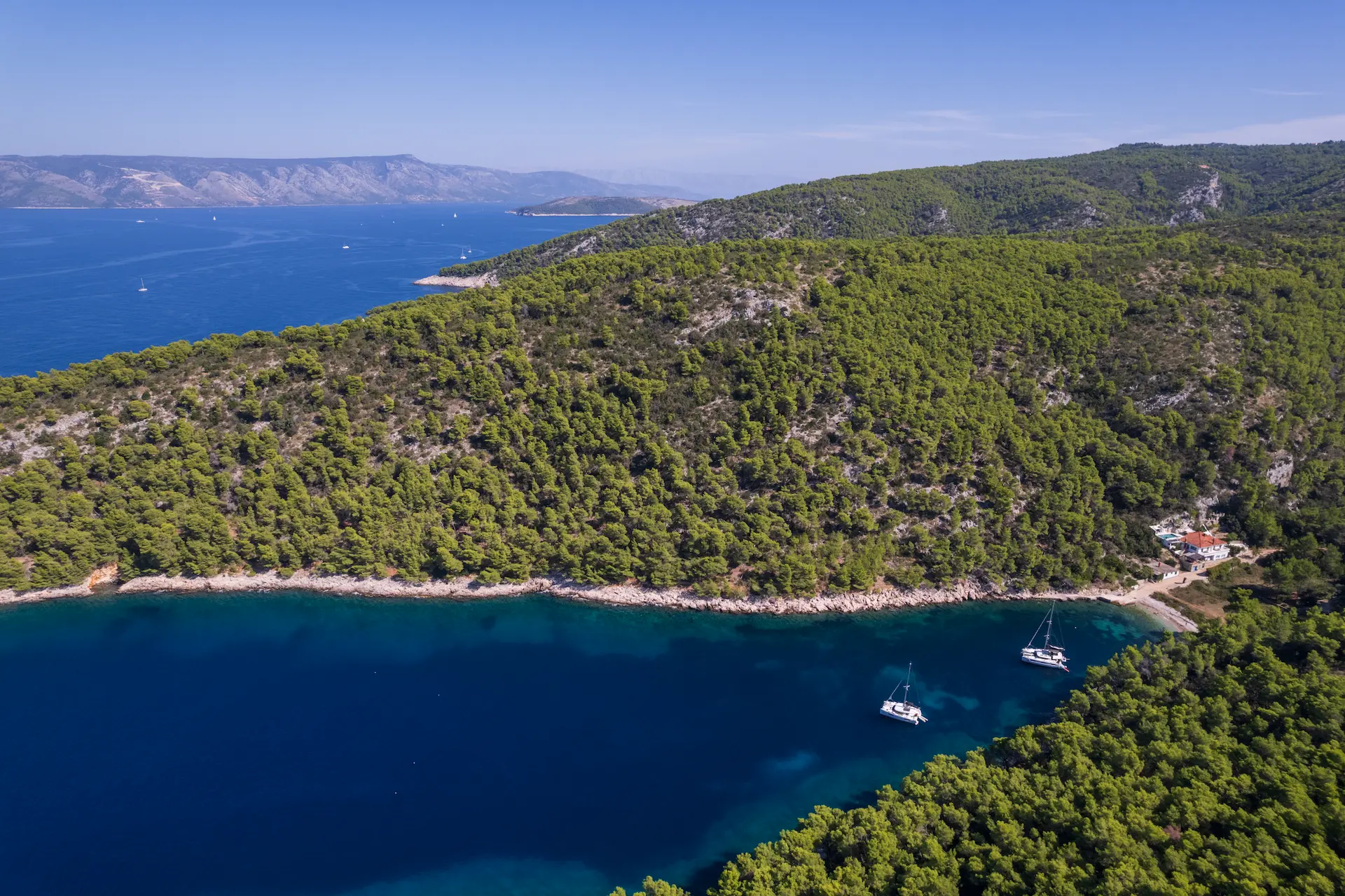
Many travellers choose Croatia because it's a safe country with many luxury experiences to offer. From various day trips and boat tours to wine tasting. But how much do you know about Croatia?
Before you take off, it’s good to research and plan your vacation accordingly. Here are the 10 most common questions our guests ask.
So, let’s uncover them in this comprehensive Croatia travel guide.
1. Where Is Croatia

Luxury pool with a view of the sea and sunset
First thing before traveling: find your destination on the map!Croatia is in southeast Europe. Geographically, it’s very diverse. From mountain ranges to one of the most beautiful coastlines in the world.
North Croatia and its capital city Zagreb are close to Central Europe. You can enjoy an atmosphere you would expect to find in big European cities such as Vienna there.
However, the Croatian coast is on the Adriatic Sea which is part of the Mediterranean. So, in the summertime, you can experience the true Mediterranean lifestyle, especially in Dalmatia and its islands.
2. How to Get to Croatia

Singpost in a beach bar in Split, Croatia
Getting to Croatia is fairly easy. You can come by land, sea, or air.Each option has its pros and cons, depending on your travel style.
If you prefer the land, you can come by car, bus, or train. Croatia is well-connected with most big European cities by train and bus. Besides,most highways in Croatia are newly built so they’re one of the safest and most modern in Europe.

Jadrolinija ferry
Also, the ferry is a great option if you’re coming from Italy. There are several routes and companies. Croatia is connected to Trieste, Venice, Cesenatico, Pesaro, Ancona, and Bari. You can bring your car on ferries connecting Ancona with Split and Zadar, and Bari with Dubrovnik and Split.
Finally, flying to Croatia is the fastest option.Croatia has nine international airportsacross the country. They are connected with most major European and a good number of global cities, especially during the summer. From there, you can rent a car, hire a private transfer, or use public transport to your destination.
Are there any direct flights from the USA to Croatia
Croatia has two direct flights to the United States. Both flights are operated by United Airlines and connected to Newark International Airport (EWR) in New York. The flight to Croatia lasts about 9 hours. However, flying back to the United States takes around 10 hours, which is an hour and 20 minutes longer due to air currents.
The flight between New York and Dubrovnik operates daily. The other direct flight is between New York and Split, which operates three times a week. You can fly from New York on Tuesday, Thursday, and Saturday. The flights from Split are on Wednesdays, Fridays, and Sundays. Both lines are seasonal from May to October.
Additionally, there’s a direct flight from Toronto, Canada, to Zagreb, Croatia, which flies three times a week during the season.
Do I need a visa to visit Croatia
It depends on where you’re coming from.
All EEA (European Economic Area) and Schengen citizens can enter Croatia freely without a visa. EEA includes all EU countries, Iceland, Liechtenstein, Norway, and Switzerland.
Additionally, the US, UK, Australian, NZ, and Canadian citizens don’t need a visa for Croatia.
However, if you’re from outside the EEA, you’ll need a visa if you’re staying in Croatia for over 90 days within a certain period of time.
Please make sure you check the exact visa requirements overview on the official Croatian Government website.
3. Is Croatia in the EU
Yes,Croatia is in the European Union as of 2013. Moreover, Croatia is amember of Schengen and the Eurozone. The Schengen area includes 27 countries and allows its citizens to travel freely without going through border control. So, getting to and around Croatia is very easy and safe.
What Is the Currency in Croatia
Guests often ask us if they should bring Croatian Kuna with them. However, it’s the former currency, no longer in use. In January of 2023, Croatia started using the Euro as its national currency.
Also, most places in Croatia accept cards,but not all. Before visiting small undiscovered towns, make sure you have some cash. If you use any currency other than Euro, exchange it. Croatia has many exchange offices, but it’s best you prepare cash before departure from your home country.
4. Is Croatia expensive to visit

Hvar Old Town
Prices in Croatia vary, and the amount you spend mostly depends on your destination and travel style.
Places like Split, Hvar, and Dubrovnik are the most expensive, especially during the high season (July and August). However, Croatia is still generally more affordable than many Western European countries.
Since Croatia adopted the euro in 2023, it has become more expensive; however, you can still find great deals where your money goes a long way. You should check out our blog “Is Croatia Expensive to Visit” to learn more about this topic.
How much money should I take to Croatia for 7 days
Let’s say you’ve already covered the costs of your journey and accommodation, and you’re wondering what your budget for day-to–day activities, food, and drinks will be.
Most travelers spend about 50-100€ per day during their holidays, but the prices increase as you visit good restaurants, try out various activities, and go on excursions.
It’s hard to give you a precise amount for a week-long holiday in Croatia, but if you want to have fun and try out new things, expect to pay around 800€ per person.
Keep in mind that you can pay with a card at most places, so there’s no reason to carry too much cash with you all the time.
5. Language in Croatia
The official language in Croatia is Croatian.
If you’re traveling to Croatia and want to connect with the local culture, we recommend you learn a few words in Croatian.

Vacation in Split, Croatia
Here are some of the most common phrases:
-
“Hi”, “Hello” - “Dobar dan”.
-
“Thank you” - “Hvala”.
-
“Goodbye” - “Doviđenja”
-
“Bye” - “Bok”,
-
“Please” - “Molim”.
-
“Bon apetit!” - “Dobar tek!”.
Here’s our pro tip: there are no silent letters and every letter is always pronounced the same, regardless of its position in the word.
Do they speak English in Croatia
To get around, it’s enough that you know English. It’s a common language in Croatia. Around 60% of people are comfortable speaking it, and almost all young people are fluent in English. Often, locals speak German and Italian, too.
6. How to Pack for Croatia
What time of the year are you traveling to Croatia? Thanks to its Mediterranean climate, Croatia has hot summers. You can learn more about the weather in Croatia in our blog.
So, if you’re arriving in the summer,pack light clothes. Don’t forget the swimsuit, some beach towels, and sunglasses. Keep in mind that sunscreen is a must!
A pair of water shoes is nice to have because Croatia has a rocky coast and pebble beaches.
What is the rainiest month in Croatia
Rain is common in autumn and winter, and the rainiest month in Croatia is November. Yet, there are many warm, sunny days, and some brave locals swim.
If you’re coming to Croatia in November, you can pack both a swimsuit and a warm winter jacket.
Are there mosquitoes in Croatia
Yes, there are mosquitoes in Croatia, especially in summer. Even though mosquitoes are annoying, they’re not dangerous and don’t carry any diseases.
Many of our villas have mosquito screens, so if you’re allergic, it’s best to ask your villa specialist to help you find appropriate accommodation. Also, you can find many repellent products in any grocery store in Croatia, from electric plug-in devices to sprays and gels
7. Local Food and Drinks in Croatia
Croatian cuisine is heavily influenced by the Mediterranean, especially in its coastal parts. Meals are prepared from fresh local meat, fish, and vegetables, combined with extra virgin olive oil.

Dalmatian prosciutto and cheese
A must-try cold appetizer islocal pršut (prosciutto ham) and cheese. We recommend Pag cheese. On the other hand, a popular and tasty warm appetizer is black risotto. Its dark color comes from the squid ink. Pasta with Istrian truffles is great as well.
Are you ready for the main course? If you’d like to try local meat, we recommend young lamb or pasticada, a marinated beef stew, served with gnocchi.
It’s common for meals such as lamb, veal, or octopus to be prepared using the“ispod peke” (under the bell) method. To have proper “peka”, order it the day before arriving at the restaurant.
Along with octopus, other popular seafood dishes include gregada, brodet, sardines (srdele), Kvarner scampi, and oysters.
Finally, Croatia has many local desserts. The most popular ones are rozata, a custard pudding with local rose liqueur, and fritule, little battered doughnut balls dusted with powdered sugar.
Of course, you have to order a drink with your delicious meal. National drinks in Croatia include wine, rakija (liquor), beer, coffee, and soft drinks.

Fine dining in Trogir
If you opt for fine-dining restaurants, definitely order red or white wine, depending on what you eat. The most popular red wines are Plavac Mali from Dalmatia and Teran from Istria and Kvarner. They are best served with cheese or red meat, especially beef. On the contrary, white wines are excellent with seafood, chicken, and pasta. Istria and Kvarner are home to white Malvasia Istriana (Malvazija), while Dalmatia is famous for native Posip wine.
Another big part of the Croatian culture is slowly sipping coffee in local cafes. It’s a daily ritual that reflects Croatians’ tendency to enjoy life and take it easy.
8. Dos and Don'ts in Croatia
While you prepare for your holiday in Croatia, let’s make a list of some things you’ll need to watch out for, and some we recommend doing.
What I wish I knew before going to Croatia
First things first, it’ll come in handy if you learn a few Croatian words and phrases to greet the locals or thank them.
You should also visit at least one National Park in Croatia. We mostly recommend Krka Waterfalls or Plitvice Lakes if you’re staying in Dalmatia, and Brijuni Archipelago if you’re in Istria.
Do try the local food. We already told you all the best dishes, so don’t miss out.
Another interesting thing you can (and should) do is drink the tap water. In Croatia, it’s generally safe to drink.
While you can pay with a card in most places, it's a good idea to carry some cash with you, just in case.
Finally, embrace the “slow down” (pomalo) culture. Locals like to take their time without rush, sip their coffee or a glass of wine, and relax by the sea.
What to skip in Croatia
Like in any other country, you should respect the people, culture, and your surroundings.
Croatia is a family-friendly destination, so you shouldn’t drink alcohol in public places, be loud, or walk in your swimsuit or shirtless in town.
What’s more, Old Towns on the Croatian coast often have cobblestone streets, so it’s best not to wear high heels. You’ll risk spraining your ankle.
Finally, don’t rush your holidays. Relax and don’t overplan anything!
What is Croatia famous for
First, Croatia is known as a popular tourist destination with diverse and tasty cuisine, exceptional thousands of years olf monuments and buildings, stunning beaches, and untouched natural beauties.
Croatia is also known as an international champion in sports, especially football, handball, water polo, and tennis.
Moreover, we also know the country for its innovators and innovations. One of them is the modern necktie, which Croatians call “kravata”.
What religion are Croatians
Croatia is a predominantly Christian country. Most people are Roman Catholic.
You can see this in many churches, cathedrals, and other religious buildings. Also, many national holidays in Croatia include religious festivals.
The most beautiful sites include the Cathedral of St. James in Sibenik and the Euphrasian Basilica in Porec, both protected by UNESCO. Of course, there are many more, since every town in Croatia has a church or cathedral.
When entering, you should be respectful and dressed in modest clothing that covers your knees and shoulders. Also, put your phone on silent and don’t make any loud noises, especially if you see people praying inside.
Tipping Culture in Croatia
Although it’s not required, tipping is part of the Croatian culture. People often leave tips in cafes, bars, restaurants, and other services. It’s a way of showing appreciation and respect for the workers.
There’s no set amount you should tip, just add how much you’re comfortable with. For example, leave a tip of around 10% of your order in restaurants. In cafes and bars, locals usually round up the bill.
You can also leave tips for your taxi drivers and private drivers, helping staff at your accommodation, tour guides, skippers, and other service providers.
9. Which is the nicest part of Croatia to visit
Even though it’s a small country, Croatia has a lot to offer. It’s most popular for its stunning coast with over 1,000 islands, islets, rocks, and reefs.

Dubrovnik City Walls and Old Town
Most tourists know about Dubrovnik, Split, Hvar, and Istria. However, there are other wonderful places worth visiting.

Zlatni Rat (Golden Horn) beach in Bol, Brac Island
Along with Hvar Island, other gorgeous islands are Korcula, Vis, Brac, and Rab. They are perfect for experiencing the art of a slow Mediterranean lifestyle and visiting crystal-clear beaches.

Trogir town
Coastal cities such as Sibenik, Zadar, and Pula are great to visit, too. They have a rich cultural heritage, beautiful monuments and buildings, and many amenities for an eventful vacation.
For day trips, Croatia has 8 national parks.In Dalmatia, we recommend Plitvice Lakes and Krka waterfalls. If you’d like to explore ones at sea, don’t skip the Mljet island in South Dalmatia, the Kornati archipelago in North Dalmatia, or the Brijuni archipelago in Istria.
Should I go to Split or Dubrovnik
Split and Dubrovnik are both beautiful destinations, and they’re both in Dalmatia, only 3 hours away by car.
Dubrovnik is perfect if you want to stay in a smaller, picture-perfect town that attracts celebrities. On the other hand, Split is bigger, ideal for a city break close to the islands of Hvar and Brac.
Since they’re so close to each other, you can definitely visit both on your holiday in Croatia.
How many days in Croatia is enough
Is forever too long? Jokes aside, although Croatia is a small country, there’s a lot to explore.
If this is your first time traveling to Croatia, we recommend at least 7 to 10 days. Also, choose a good base that makes day trips easy.
For example, stay in one of our luxury villas in Split. In 7-10 days, you’ll be able to visit the islands in Central Dalmatia, go to Dubrovnik, explore the smaller towns like Trogir and Omis, and go to one of the National Parks, like Krka Waterfalls or Plitvice Lakes.
What is the best time to visit Croatia
This all depends on your preferences. Of course, the summer months (July and August) are the most popular. The weather is sunny and dry, everything is open, and you can enjoy beach time. Needless to say, this is the busiest and most expensive season.
So, many people now choose to travel in shoulder season, which is from May to June and September. The prices are lower, the days are still mostly sunny and long, and you can swim.
We answer this question much better in our blog “What's the Best Season to Travel in Croatia” so check it out.
Where do celebs go in Croatia
Celebrities usually go to Dubrovnik, Hvar, or Split.
Some of the most popular people who visited Dubrovnik are Beyoncé and Jay-Z, Jeff Bezos, and David and Victoria Beckham. The full list is too long, but you can learn more about this in our blog “Celebrities in Dubrovnik”.
Beyoncé and Jay-Z also visited the island of Hvar, just like Prince Harry, Michael Jordan, and Jude Bellingham.
Split, the biggest city in Dalmatia, attracted celebrities like Matthew McConaughey, Chris Rock, and Sacha Baron Cohen.
Celebrities also like to explore charming Istrian towns. Ryan Reynolds, Salma Hayek, and Samuel L. Jackson visited Rovinj when filming their movie The Hitman's Wife's Bodyguard.
Finally, Vis Island became popular as well, especially since Mamma Mia!’s sequel with Meryl Streep and Pierce Brosnan was filmed there.
10. How to Find Perfect Accommodation in Croatia
Last but not least, you’re ready for the final step: booking the perfect accommodation. Since Croatia is a tourist country, there are many options. For a truly splendid experience,rent a luxury villa in Croatia. You can’t go wrong!

Luxury Villa Aqua Haven with Pool
The luxury villa provides you with comfort, privacy, and entertainment. You can book a villa only a few steps away from the beach with magical views of the Adriatic Sea. While some villas are hidden from the crowds and surrounded by nothing but greenery, others are right in the buzzing centres of beautiful towns. Anyone can find something that perfectly fits their needs.
Learn More About Croatia
So, you are now better equipped for your vacation in Croatia!
What’s more, we have a blog called “Useful info about Croatia” where we’ve gathered answers to more questions our guests often ask. It will provide you with some additional information about this wonderful country.
We wish you all the best on your upcoming Croatian holiday!
 Call Us